3 min read

Why Medical Courier Routing Matters in Healthcare Logistics

Why Medical Courier Routing Matters in Healthcare Logistics
6:55

Most people think medical courier routing is simply getting from one stop to the next. In reality, every route has to balance scheduled pickup time windows, STAT requests, delivery windows, and unexpected changes that can happen at any point during the day. That's why medical courier routing plays such an important role in keeping healthcare logistics and laboratory operations running efficiently. Every day, couriers transport specimens, supplies, and other critical materials between hospitals, physician offices, and laboratories. A well organized routing process keeps everyone working from the same plan, improves communication, and helps deliveries stay on schedule even when the day doesn't go exactly as planned.

What Is Medical Courier Routing?

Medical courier routing is the process of planning, organizing, and managing the daily routes couriers follow while transporting specimens and supplies. Some organizations rely on the same scheduled routes each day, while others adjust routes throughout the day based on changing workloads, emergency requests, or additional pickup locations.

Successful medical courier routing isn't about finding the shortest route. It's about making sure the right pickup happens at the right place, at the right time, even when the day's schedule changes. Dispatchers must coordinate pickup schedules, delivery windows, route changes, and courier availability while making sure drivers have the information they need to complete every stop. As healthcare organizations continue to grow, a structured routing process becomes increasingly important for keeping laboratory logistics organized and efficient.

Static Routes and Dynamic Routes Support Different Operational Needs

No two medical courier operations are exactly alike, which is why many organizations use a combination of static and dynamic routes depending on their needs. Static routes are ideal for facilities with predictable pickup schedules that remain relatively consistent from day to day. They create routines for both dispatchers and couriers while making it easier to manage recurring laboratory pickups and deliveries.

Dynamic routes provide the flexibility needed for deliveries, such as pharmaceutical or supplies to patient homes, that change on a daily basis. As patients' needs change, so can the daily route of couriers.

Anyone who has worked in medical courier operations knows the day's original route rarely stays the day's final route. When those situations arise, couriers need updated route information quickly so they don't lose time trying to figure out what changed or risk missing another scheduled stop. Whether an organization relies on static routes, dynamic routes, or a combination of both, organizing route information in one centralized system creates a more consistent experience for everyone involved.

Route Changes and STAT Dispatches Require Clear Communication

Healthcare operations rarely follow a perfectly predictable schedule. Laboratories may receive unexpected STAT requests, clinics may call for an additional specimen pickup, or dispatchers may need to reroute couriers as priorities change throughout the day. When these situations occur, clear communication becomes just as important as the route itself.

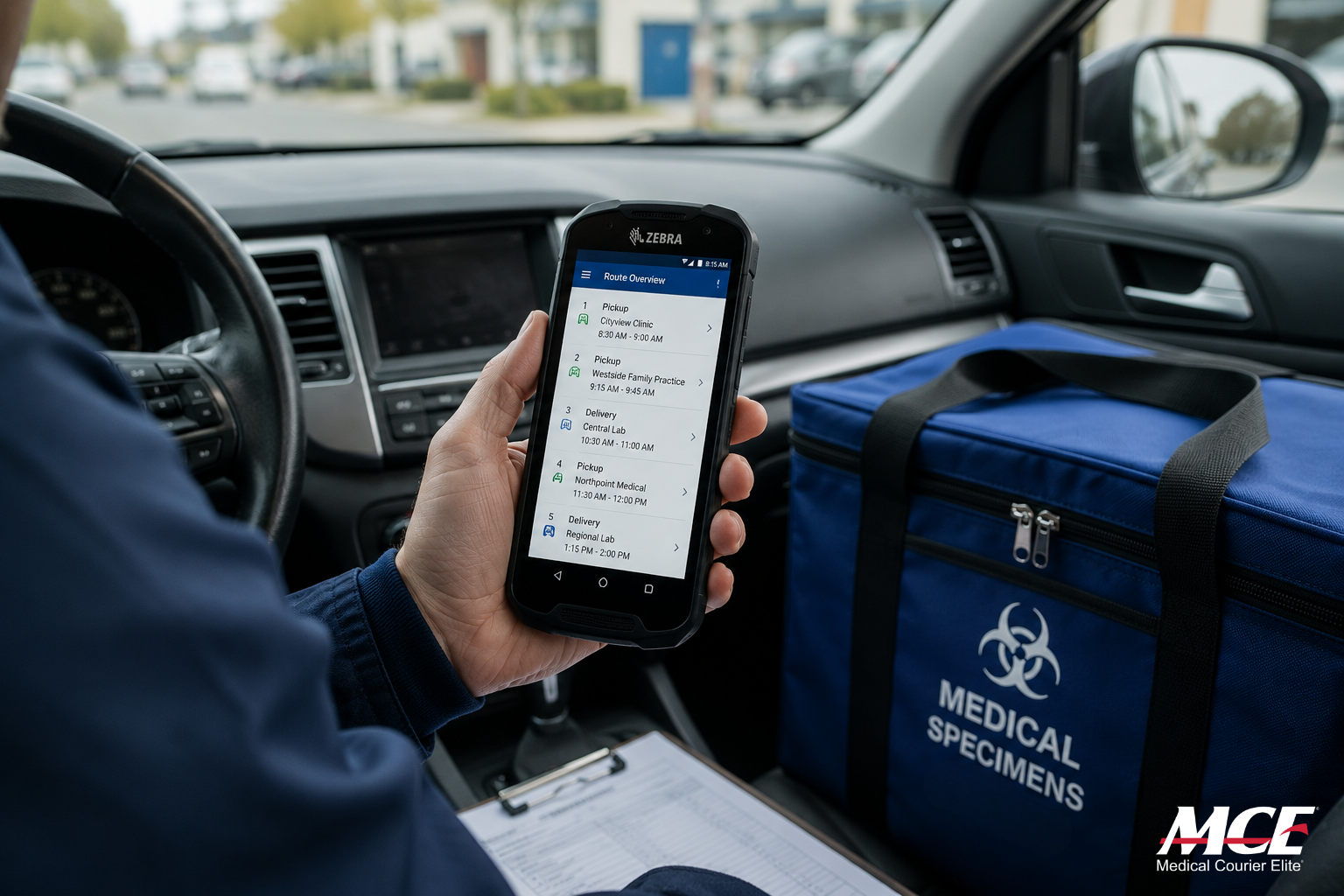
Phone calls, text messages, and handwritten notes can certainly get the job done, but they also increase the chance that important information will be missed or misunderstood. Delivering route updates directly through a mobile application keeps everyone working from the same information while giving couriers immediate access to new assignments. Requiring couriers to acknowledge route changes and STAT dispatches also gives dispatchers confidence that critical updates have been received before work continues, eliminating unnecessary follow up calls and reducing uncertainty throughout the day.

Keeping Medical Couriers on Schedule

Staying on schedule involves much more than knowing the next destination. Couriers need clear directions, organized stop sequences, and visibility into the work ahead. When route information is easy to access, drivers spend less time figuring out where to go next and more time focusing on safe, reliable deliveries.

Administrator optimized routes present stops in the correct order, making it easier for couriers to stay organized throughout the day. Built in turn by turn navigation makes reaching unfamiliar locations simple without interrupting the rest of the route, while organized route information reduces the likelihood of missed stops. Being able to quickly view scheduled time windows and route updates also allows couriers to adjust as changes occur without losing sight of the rest of their schedule.

Why Medical Courier Routing Software Matters

As courier operations grow, managing routes with spreadsheets, printed schedules, or phone calls alone becomes increasingly difficult. Medical courier routing software brings route information, schedule updates, and dispatch communication together in one place, giving both dispatchers and couriers a clearer picture of daily operations.

When route information, notifications, navigation, and dispatch updates all live in one place, couriers spend less time searching for information and more time completing deliveries. Dispatchers can quickly communicate changes as they happen, and couriers always know what comes next. That means fewer interruptions throughout the day and more time focused on serving healthcare facilities.

Simplifying Medical Courier Routing with Medical Courier Software

At the end of the day, effective medical courier routing isn't just about planning routes. It's about giving dispatchers and couriers the tools they need to respond when the unexpected happens while keeping laboratory operations moving forward. Whether managing scheduled routes, responding to STAT requests, or making last minute adjustments, clear routing information helps keep daily operations organized from the first pickup to the final delivery.

MCE Routing and Logistics was designed specifically for medical courier operations, giving dispatchers and couriers one place to manage static routes, dynamic routes, route changes, STAT dispatches, administrator optimized routes, turn by turn navigation, scheduled time windows, and required acknowledgment of dispatch updates. Instead of relying on multiple tools to manage daily routing, organizations can keep everything together within a single mobile application while giving their courier teams the information they need throughout the day. Interested in learning more about MCE Routing and Logistics? Click here to connect with our team today.